By Jessica Wakeman
Editor’s note: This is the second in a three-part series on homelessness in West Asheville. You can find Part 1 here.
Several years ago, notes Asheville Mayor Esther Manheimer, the city’s main tool for addressing homelessness issues “was to call the police.”
But in more recent years, Manheimer continues, the city has invested in increasing available resources. “We have worked so hard in partnership with Buncombe County to figure out how to reimagine public safety and embrace different ways to respond to the crisis.”
For Kim Drye, owner of West Asheville Yoga, the key challenge she and fellow business owners and residents in West Asheville face in their daily interactions with unhoused neighbors is the volatile nature that addiction and/or behavioral health crises often create among the homeless population. “That unpredictability is really challenging to navigate for people that are not trained social workers or mental health professionals,” Drye says.
Last summer, the Asheville Buncombe Continuum of Care (CoC), the planning body to address homelessness, developed a work group to focus on West Asheville.
“The CoC board identified that there was such an increase in people experiencing unsheltered homelessness in West Asheville and wanted to give particular focus to that area to identify some strategies that would be able to respond to that increase,” explains Emily Ball, the city’s homeless strategy division manager.
In Part 2 of Xpress’ three-part series on homelessness in West Asheville, we explore the specific services that community members can turn to for help, how impactful these initiatives have been in addressing concerns tied to substance use disorder and mental health struggles, and what West Asheville shopkeepers and nonprofits think about the effectiveness of these initiatives.
No REST for the weary
When it comes to emergency dispatch, “Person down” is a common call among first responders. The term, explains Patrick Crudup, a former assistant fire chief for the Asheville Fire Department (AFD) who retired Feb. 1, often refers to one of two situations: an overdose or someone sleeping where it is not permissible to do so.
In May 2023, AFD created its Resource and Engagement Support Team (REST), which launched in downtown Asheville before expanding citywide in July 2024. Hillary Jones is the team’s program manager and one of eight members — five firefighters and two peer support specialists complete the unit.

REST, says Jones, is the “first point of contact” for residents or businesses experiencing challenges related to unhoused neighbors. Anyone can contact the team on the Asheville App or call 828-252-1110. REST operates seven days a week, 8:30 a.m.-9 p.m.
According to the City of Asheville’s dashboard, available at avl.mx/fl7, from July 1, 2024, through May 31, 2026, REST has provided 936 shelter referrals, 140 housing referrals and 972 opioid responses. In total, the team has responded to 2,600 events.
“A lot of times, REST are proactively driving around” and interacting with the homeless population, says Evan Flanders, a West District lieutenant for the Asheville Police Department (APD). “They help a lot just by preventing something from becoming a problem,” Flanders continues. “They may see a guy on a corner that they know” and help that individual find a safe place to stay overnight.
In West Asheville, REST works closely with organizations such as Safe Shelter, a shelter for families on Balm Grove Avenue, which launched its own outreach program in the neighborhood last summer. Similar to REST, Safe Shelter develops rapport with unhoused individuals and, when appropriate, fosters communication between them and neighbors.
“It just takes conversation and understanding,” says Christian Chambers, Safe Shelter’s executive director and a member of the CoC’s West Asheville work group.
Safe Shelter’s outreach also tries to educate neighbors about how to recognize an overdose, as well as how to differentiate violent behavior from a mental health crisis, Chambers continues.
Meanwhile, fellow nonprofit Homeward Bound also has a three-person outreach team, which visits West Asheville “almost daily,” says Alanna Kinsella, the organization’s homeless services director.
“Community members can either report if they suspect somebody is experiencing homelessness, or the human can report that they’re experiencing homelessness,” Kinsella explains. “We also have a link for encampments. [It] has been helpful for us to get out to humans and try and connect with them to let them know that where they’re staying is not a safe place.”
In an email with Xpress, Jessie Figueroa, Homeward Bound’s resource development director, writes that a “key milestone” for the nonprofit “is when someone transitions off the streets into a safe home.” Case managers continue to support clients after housing placement, she adds. “Long-term stability is one of our strongest measures of success,” Figueroa notes. “In 2025, 92% of people in our Permanent Supportive Housing Program remained stably housed and did not return to homelessness.”
REST also works with the city’s sanitation division, which cleans up trash that may be at encampments. The sanitation department has a program that distributes purple purple bags to individuals who are unhoused. Sanitation workers know to exercise extra caution as these bags may include sharps, such as hypodermic needles. City spokesperson Kim Miller says the city has ordered approximately 5,000 bags since the program’s inception.
REST does not enforce the panhandling ordinance, which Asheville City Council expanded in August. If REST witnesses someone actively breaking the law, says TJ Fortenberry, a lieutenant with AFD, “We call APD.”
Healthcare for the unhoused
Connecting the unhoused population with healthcare is a major focus for the Mobile Community Outreach Team (MCOT), which launched in 2022 through American Rescue Plan Act funding.
“The main focus is to help people overcome barriers to accessing healthcare,” says David Pike, a community paramedic. “Some of that’s direct, like first aid. But most of it’s helping them figure out what they need and where to get it, and then actually helping them get to it and navigate insurance or helping people call places.”
Often, MCOT drives people to one of three federally qualified clinics, which provide healthcare regardless of a person’s ability to pay: Western North Carolina Community Health Service, Mountain Area Health Education Center and Appalachian Mountain Health.
MCOT, continues Pike, “really takes the load off of the 911 system.”
Wound care, particularly treating infected wounds from substance use, is one of the most common first-aid issues, says paramedic Caroline Keys. Foot blisters due to frequent walking, as well as trench foot from soggy socks, are also common.
“It’s so hard to manage anything without constant access to water and soap,” she says. “So it can take things a little bit longer to heal.” Frostbite, Keys adds, is another challenge for the unhoused community.
MCOT also helps people treat persistent health issues such as chronic obstructive pulmonary disease (COPD) and diabetes. “A lot of underlying chronic conditions are hard to manage when you’re living in a shelter or on the street,” says Pike. “People ask to have us check their sugars a lot, check their blood pressure.”
APD’s role with the homeless community
Frequently, says Flanders of APD’s West District, the types of homelessness-related calls that his unit fields are tied to behavioral health challenges. “There’s a good portion of them that have mental health illness, and that can cause them to yell or have confrontational interactions with people,” he explains.
Officers, he continues, have the discretion to determine the best way to resolve such episodes. “Is taking them to jail going to help them or not?” Flanders asks. “It may be a valid option to get them off the street and keep them from hurting somebody else until we can get them some help.”
However, Flanders continues, “Lots of them already have counselors that they’re involved with. We have [RHA Health Services] mobile crisis that we could contact, or if they have their counselor’s name and phone number, we could call and be like, ‘Hey, I’m out here with John. He’s having an issue.’”
As for overdoses, officers typically respond at the same time as EMS or the Fire Department. “When an officer arrives on scene, and someone requires medical assistance, that takes priority over an arrest,” says APD spokesperson Rick Rice. “Investigating officers would then decide on potential charges, if warranted, on a case-by-case basis.”
Involuntary commitments are less common, says Flanders. But APD can temporarily detain someone for an emergency evaluation. “If the person is in such a state where they are trying to run into traffic and get hit by a car to kill themselves, then we have the authority to temporarily detain them and take them to the hospital to be evaluated by a clinician,” Flanders explains. “Then the clinician would make the determination whether they needed to be committed or not.”
Multiple groups, including MCOT and REST, assist with addressing behavioral health challenges, including providing transportation to pharmacies or doctor appointments.

For example, REST can pick up prescriptions for people who need medication, Crudup explains. There are also two part-time clinicians on the community paramedics team, who can provide one-on-one direct counseling as well as help people access detoxification or rehabilitation programs.
Meanwhile, Safe Shelter outreach is “continually checking in with some of these individuals that need a higher level of care,” Chambers notes.
Mood disorders, depression, anxiety and post-traumatic stress disorder (PTSD) are all associated with homelessness, says Dr. Richard Zenn, chief medical officer at Vaya Health. “It’s hard to sometimes tease out cause and effect,” he continues. “There’s definitely an association. But homelessness itself is also a risk factor for mental health issues and for substance use issues.”
Methamphetamine, opioids and alcohol are the three main substances that are seen in Buncombe County, says Zenn.
Buncombe County’s Post Overdose Response Team (PORT) co-responds to 911 calls involving overdoses. The estimated overdose rate in Buncombe County in 2025 was 22.9 out of 100,000 residents, or approximately 64 people who died from an overdose, according to the N.C. Department of Health and Human Services Overdose Epidemic Data. This represents a 38% decrease from the previous year.
PORT will ask people who survive an overdose if they want a connection to substance abuse treatment and then connect them to resources.
Regarding treatment for substance use disorders, transportation can again be a barrier, says Zenn. He notes that Medicaid recipients can sometimes access Medicaid transportation (also called nonmedical emergency transportation) to medically necessary appointments.
Zenn adds that several Vaya Health providers are currently implementing mobile opioid treatment programs. “We’re doing everything we can to try to increase access to [medication-assisted treatment],” he says.
‘De facto social workers’
Ben Williamson, executive director of Asheville Poverty Initiative (API), says the Fire Department’s REST team and Buncombe County’s emergency services community paramedics are a welcome presence at API’s 12 Baskets Cafe, which serves free meals four times a week. Of the REST team, Williamson says, “We wish they were double, triple in strength.”
But in addition to connecting with people who are unhoused, Drye of West Asheville Yoga thinks there needs to be more outreach to the business owners and residents about the existing services for people who are unhoused. And, she adds, she would like to see all of these programs acquire more resources.
“I’m less attached to any single solution,” Drye says, “than I am to seeing investment in mental healthcare crisis response and clear pathways that don’t rely on business owners acting as de facto social workers.”
For Manheimer, the strategy to address these issues must be an all-hands-on-deck approach. In addition to the city continuing its support of the CoC, she notes the nearly $430,000 Asheville has invested in shelter expansion over the previous year.
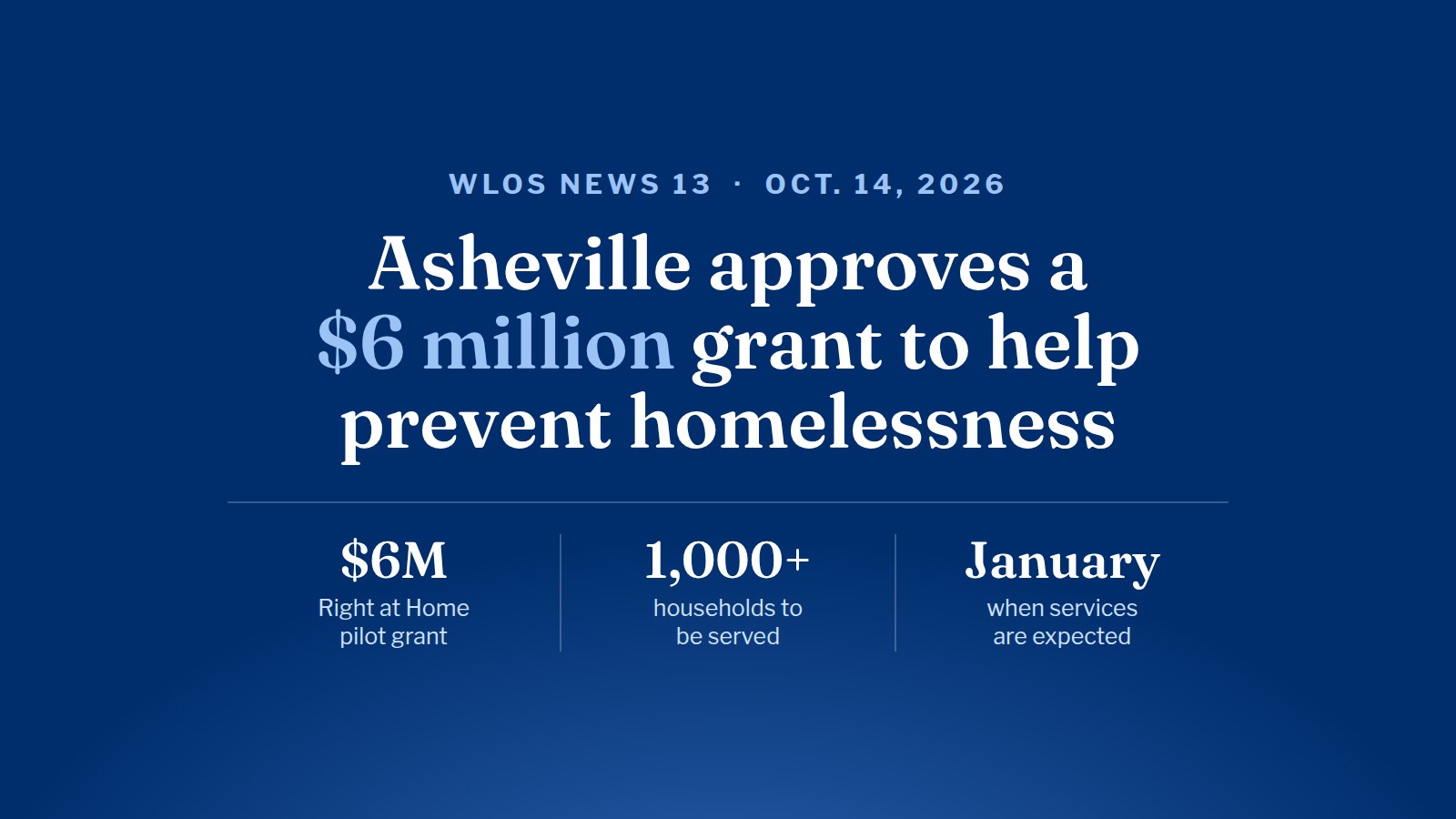
Additionally, the mayor points to REST’s continued efforts, a renewed partnership with the Housing Authority of the City of Asheville that fast-tracks people into housing and Asheville’s inclusion in a national pilot program designed to prevent vulnerable families from ever becoming unhoused as examples of the city’s progress.
“We are holistically thinking about how to address this crisis,” Manheimer says.
Editor’s note: This story was updated on June 8 to accurately reflect Alanna Kinsella’s title with Homeward Bound WNC.