Name:
Esther Manheimer
Name of Campaign Committee:
Manheimer for Mayor
Office you are seeking:
Mayor of Asheville
Would you like your candidacy to be endorsed by the Sierra Club and why?
Yes. I have a strong record of climate leadership, recognized nationally through my work with Climate Mayors, and I welcome the Sierra Club’s partnership in continuing this work.
The French Broad River has been named an “impaired river” and suffered massive flooding.
Would you support enhanced storm water regulations to protect the river and its tributaries and reduce future flood damage?
Yes. We’re rebuilding the Swannanoa (Azalea) and French Broad River parks using federal public assistance funds, hazard mitigation funds, and CDBG-DR dollars, that I worked hard to secure from Congress, to better withstand future disasters. This is a community-led process, our first major community event brought out more than a couple hundred people to help shape the vision. I also support the 2026 County Bond Initiative’s $30 million for open space conservation, water protection, and creating more parks and greenways. I also support both the City ad County’s bonds for affordable housing, which is also an environmental issue. Future development must protect watersheds and tree canopy through thoughtful zoning that directs density toward transit corridors and existing infrastructure rather than sprawl.
Will you ensure environmental improvements and repairs are made to the riverways as part of the parks overhaul including riparian buffers?
Yes
What ideas do you have to improve awareness and efforts about local climate change and ways we can advance or improve efforts to reduce future impacts.
I have personally spoken about the effects of local climate change on not only Asheville and its people but all local governments who are struggling to maintain infrastructure vulnerable to severe weather events and other effects of climate change. I have brought city employees to conferences around the state to speak to other local government leaders about this issue and I have he participated in climate week speaking at the Clinton Global Initiative as well as at the Climate Mayors conference regarding the effects of climate change.
I have also spoken about ways to reduce future impacts; and while there are many ways to address the future impacts of climate change, I have been working to bring funding to the city to allow for the construction of redundancy in our water system as well as water filtration infrastructure so we can ensure that we have drinkable water the next time our reservoir is affected by severe weather. The cost of these improvements is in the 10s of millions of dollars and in some cases hundreds of millions. But I have worked hard to ensure that Asheville sees at least a billion dollars worth of investment over the next five to six years from federal funding to make these needed changes.
Should the city minimize storm water runoff by requiring/incentivizing more green infrastructure, retention or detention basins, rain gardens, or other methods to reduce surface water runoff and flooding?
Yes.
Single use plastics are a major contributor to water pollution including micro-plastics found in water samples in the French Broad River. They clog storm drains, the recycling center, and our landfill.
Would you vote for a policy requiring the city to reduce its use of single use plastics?
Yes, and I have been prepared to support this initiative in the past until the legislature passed legislation preempting cities from adopting such policies.
What ideas do you have for plastic reduction, single use reduction, and overall waste reduction?
Short of passing a prohibition on single use plastics, the city can provide education and information regarding the harm that single use plastics causes our environment, as well as establishing a voluntary program for retailers to participate in.
Asheville City is undergoing an Urban Forestry Master Plan. Why is the unused funding in the Tree in Lieu fund not being used for the many areas of the community that would benefit from the planting of the trees? How will you activate these funds and get trees in the ground in your first year?
This is a good question and one that I have put to staff, several times. The response that I receive is that staff wants to and needs to draft a policy as to how these funds will be expended and invested in the planting of trees on city property, as that is the purpose of these funds. I have expressed my frustration with the slowness of this process, and I am hopeful that with some of the recent staff changes we will see an acceleration in rolling out this program.
Asheville City Council has adopted a plan to expand public transportation, including routes, frequency, and hours of operation.
Do you support greater coverage and reduced frequency or greater frequency on fewer routes, and which will increase ridership?
I’ve grown funding for the Transit Master Plan: more routes, greater frequency, weekend and evening service, enhanced stops. As we complete our Comprehensive Operational Analysis, the solution is likely a blended model between ridership and coverage; with bus driver shortages and fleet challenges, ridership may be the direction we need, but that decision will be made with the community.
Is ridership growth important? If so, how do we achieve it?
Yes. We are testing how to achieve it through the transit plan we are now considering: it is a ridership growth plan.
How will transit continue to be funded?
I continue to support funding transit from the general fund and parking revenues and this year I supported increasing the number of metered parking spaces in the city in order to discourage transportation by car and grow transit revenues. In addition, I support asking voters to approve a countrywide sales tax referendum for transit to fund real expansion.
The city has a multi-modal commission to better address the mix of transportation modes in the city, including bicycles and pedestrians. How do you think that commission should prioritize its efforts?
The Multimodal Transportation Commission should focus first on safety, connectivity and implementation. Asheville has adopted many transportation plans; the challenge now is turning those plans into completed projects that make it easier and safer for people to get where they need to go. We should prioritize projects that close critical gaps in our sidewalk, greenway and bicycle networks, particularly routes that connect neighborhoods to schools, employment centers, commercial areas and public transit. The City’s GAP Plan already provides a data-informed framework for identifying many of these priority pedestrian, accessibility and greenway projects. The Commission should use that framework, along with data and community input, to help direct funding toward the projects with the greatest safety and community benefit.
Focusing on safety and connectivity means building out transportation infrastructure that provides a complete streets concept that works for walkers, bikers, transit users, drivers, and people of all abilities, meaning sidewalks, crosswalks, bike lanes, transit stops, safe intersections, and traffic calming. RADTP got this right. The Merrimon Avenue Road Diet, which I supported, has inconsistent lane markings and no protected bike lane. This provides an example of where we need to improve.
Given that global climate change is with us, Asheville City council has adopted a 100% Renewable Energy Goal by 2030 for all city government operations including adoption of LEED Gold Standard for green buildings and installing solar panels on some city owned buildings and property. The city is missing its target of reducing carbon emissions by 4% per year.
Do you support the continuation of these programs? Are you willing to continue to reinvest the savings from these programs into the Green CIP (the nation’s first municipal energy savings capital improvement fund) and to continue to increase energy efficiency and renewable energy?
Yes, I support continuing this work, though we are behind on our targets. Rather than micromanage staff, I am leveraging my leadership with Climate Mayors and the U.S. Conference of Mayors to bring proven solutions to Asheville. On Green CIP reinvestment, EV fleet transition, and solar alternatives like public building roof top or parking lot solar. Any mitigation evaluation system must not create bigger bureaucratic burden and expense for residents, delaying effective action and wasting resources.
If the city cannot fund the new rooftops needed to support solar goals, what is the alternative? Community solar? Parking lot solar?
All of the above.
Weaverville now has EV Police Cars. Would you support replacing fossil fuel powered city vehicles, police cars, and buses with electric powered vehicles as they need to be replaced?
Yes.
What other measures would you propose to reduce our carbon footprint and to get the city back on track to meet its goals?
There are many examples but a major one is practical zoning changes to increase density of housing in developed areas, especially areas in traffic/urban corridors and on bus lines.
Will you help in finding grants that Asheville can apply for to help us with some of our environmental initiatives?
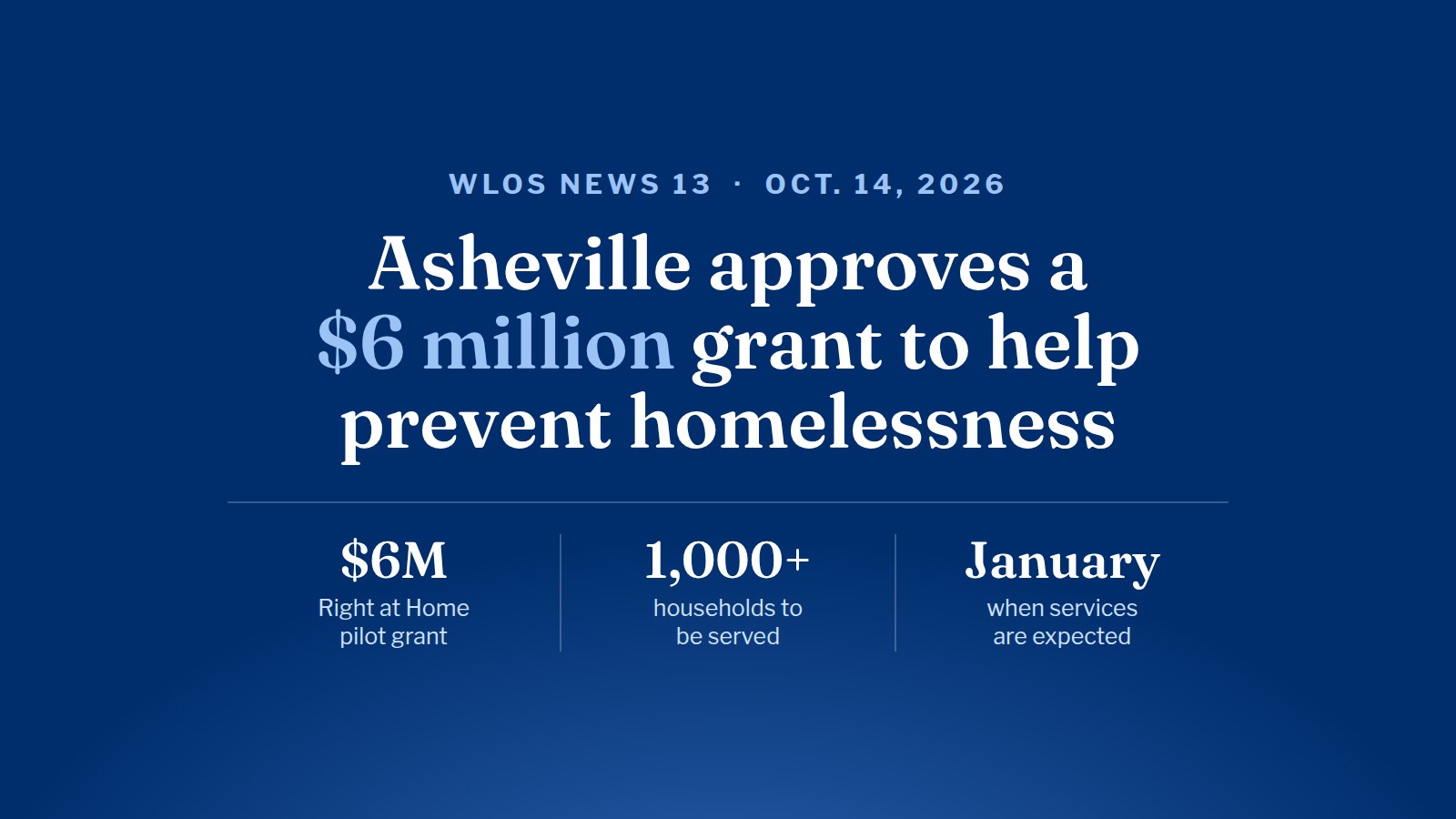
Yes, as discussed above, I have worked hard to harness millions of dollars for Asheville to invest in infrastructure resiliency which includes many projects aimed at the city’s environmental initiatives. And just recently, I worked hard to successfully have the city awarded a $6M grant (over the next three years) to prevent homelessness. I have made many trips to Washington to lobby on the city’s behalf. I’ll continue to put the same effort into additional grants for environmental initiatives.
Would you be willing to lobby the Tourism Development Authority to help fund more Greenways and Parks in Asheville?
Yes, and I already have and continue to do so. I lobbied the TDA to move the funding they allocate to infrastructure from 25% of their annual budget to 33%. That took a tremendous effort working across the aisle to gain local support for this needed legislative change. These funds can and are being used for greenways, bike infrastructure, parks and more. All ways to preserve this beautiful city and make it possible for locals to enjoy.
The city is facing an affordable housing shortage. What would you do if elected to address this critical issue?
First, I would continue to vote for affordable housing. We need more affordable housing of all kinds, including missing middle Housing. And, we need more money allocated to single-family home repair, so longtime residents can stay and age in place. I have supported funding of millions of dollars toward new construction of affordable housing as well as single family home repair. Building more affordable housing while maintaining existing affordable housing through repair programs is just one way to implement the city’s anti-displacement efforts.
I’ve helped build the city’s toolbox to address this: the Affordable Housing Trust Fund making grants (Haywood Street Congregation, Mountain Housing Opportunities, Habitat for Humanity), and incentives for private developers. I advocated to build on city-owned property, which we did at the old parks and recreation maintenance facility at Clingman and Hillier, and next at the old Matthews Ford site. I’ve also advocated for and delivered emergency rent relief, home repair grants, down payment assistance, and property tax relief for income-qualified homeowners. If re-elected, I will build upon this work.
Would you support higher density infill development and denser development, and the zoning changes necessary to implement these solutions?
Yes. I consistently support infill and denser development. I support Consolidated Growth as outlined in Elevate 2050, concentrating housing, jobs, and development in already-urbanized, walkable areas along dense corridors rather than sprawling outward. I strongly supported a recent zoning change increasing the threshold for by-right multifamily housing on urban corridors, and I support missing middle housing (duplexes, triplexes, small multiplexes) by right, because housing scarcity directly correlates with homelessness rates. These are some of the most controversial votes I’ve cast, and I’ve worked hard to bring neighborhoods and developers together to find workable compromises.
Would you support allowing duplexes and townhomes in more neighborhoods and expanding access to Accessory Dwelling Units by increasing their size?
Yes, I would support allowing duplexes and townhouses in more neighborhoods. The question regarding ADUs is confusing but to the extent it’s asking whether I support the expansion of the ability to build ADUs on more lots by decreasing setbacks, decreasing driveway widths, and allowing larger ADU square footage, then, yes, I do support those changes.
What are the major challenges facing the city of Asheville and what will be your top priorities if elected?
My priorities are affordable housing, climate-resilient infrastructure, and competitive pay for city employees so we retain experienced staff. Recovery funding creates a once-in-a-generation opportunity to invest in historically underserved neighborhoods and build resilience through resilient infrastructure and programs like resilience hubs. I’ll continue prioritizing neighborhoods that have faced decades of disinvestment, using data to identify gaps in community needs such as recreation spaces, sidewalks, stormwater management, and green space access, and ensuring community input drives those decisions.
What do you anticipate will be the most important environmental and environmental justice issues you will face if elected? What actions do you plan to take to address these issues?
Climate equity means frontline and marginalized communities actively participate in planning and benefit equally from the transition to a climate-safe economy. Our recovery investment is required to direct 70% of $225 million in CDBG-DR funds to low-to-moderate income neighborhoods. This means creating resilience centers in partnership with neighborhoods to formalize the grassroots support that residents provided each other during Helene, preparing us for future disasters we know will come, while ensuring no single group of louder voices drowns out the rest of our community.